News

what’s going on in and around TransforM?

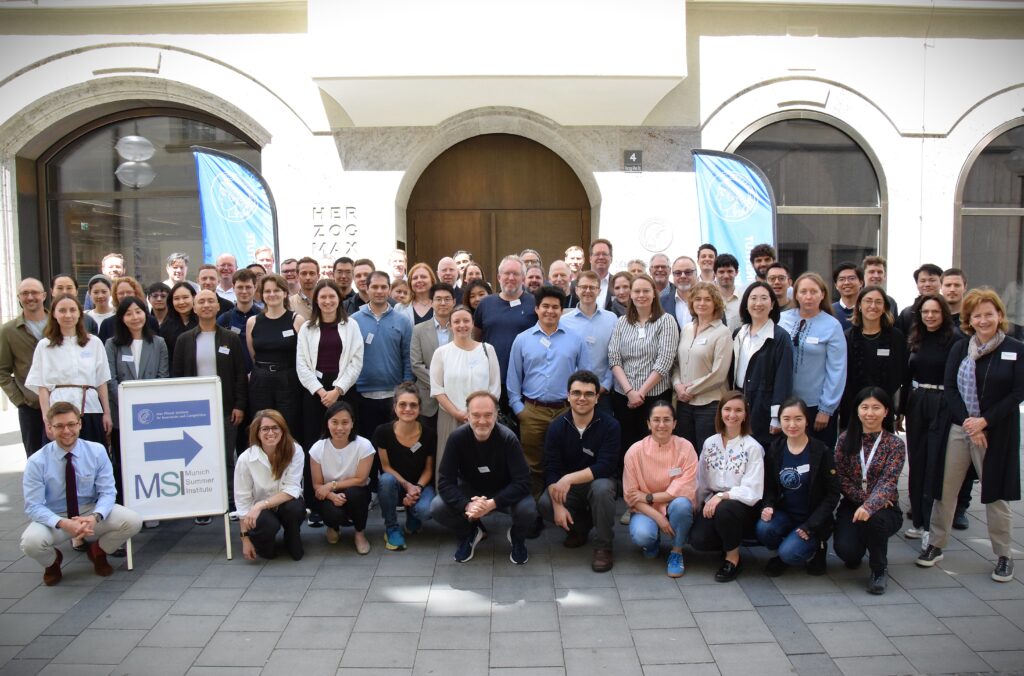
The 10th Munich Summer Institute (MSI) took place this week, convening an international and interdisciplinary network of researchers to discuss cutting-edge developments in economics, law, management and technological innovation.
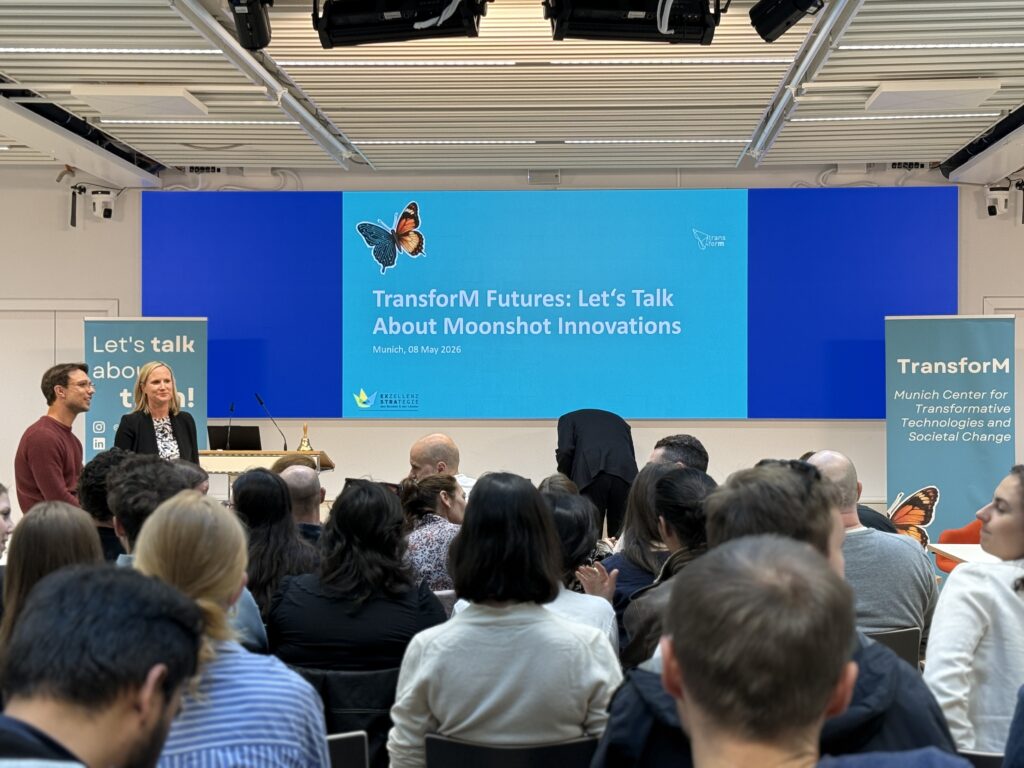
On May 8th, the TransforM community and the public gathered for a discussion on “moonshot innovations” at the Max Planck Institute for Innovation and Competition in the heart of Munich.
In March, Dr. Marlise Horvath Schneider and Dr. Amy Clare hosted ‘Futuring our World’: An Imaginative Ideathon’ at South by Southwest (SXSW), a music, cultural, and tech festival in Austin, Texas. This event was co-organized with the City of Munich and the German Haus, which aims to create more dialogue between the US and Germany.
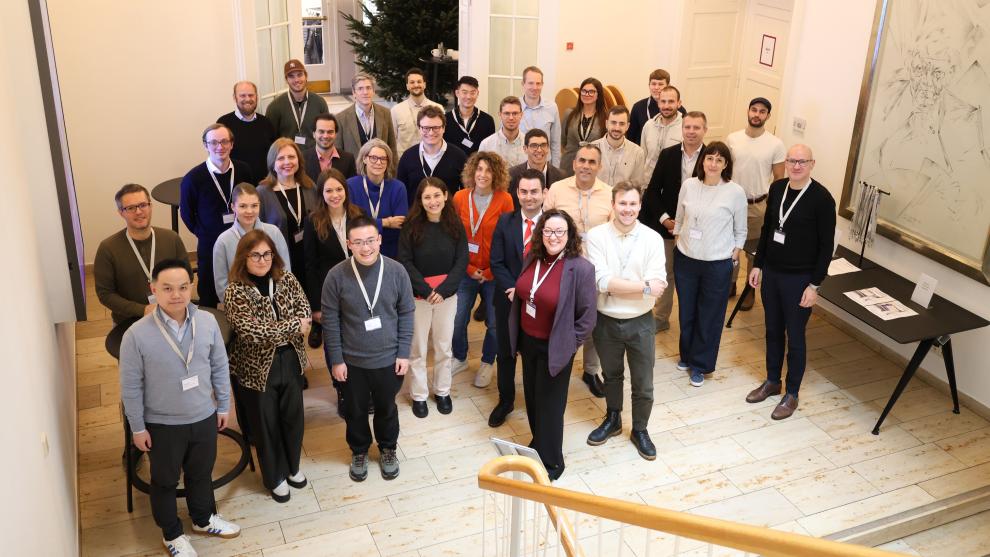
Artificial intelligence is considered the most significant technological innovation of our time with profound implications for labor markets, businesses, and economic policy decisions. The workshop “Economic and Societal Impacts of AI,” which CESifo hosted at the ifo Institute in Munich on December 5 and 6 in collaboration with the TransforM Cluster of Excellence, centered on what this transformation means and how it can be shaped.
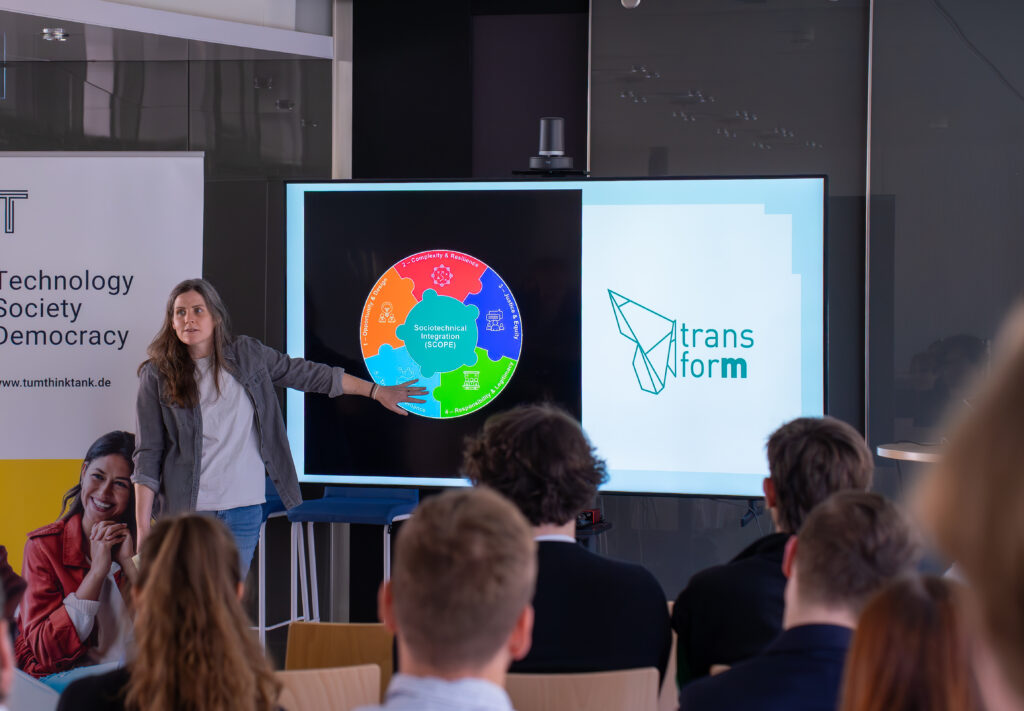
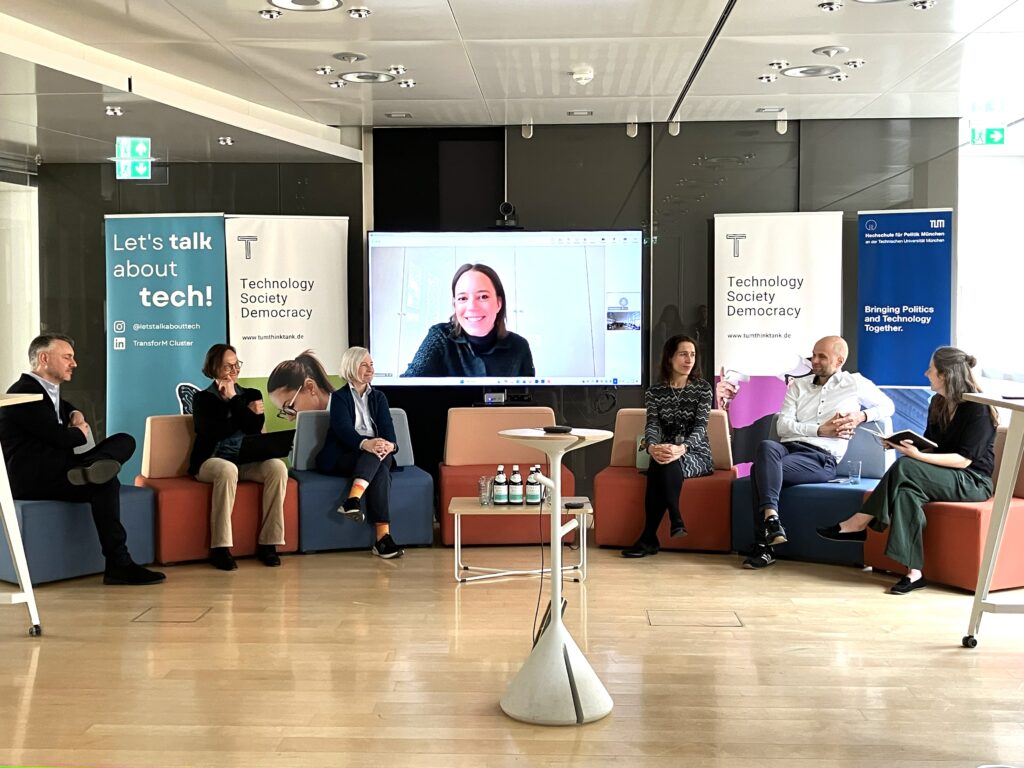
On April 30th, TransforM co-hosted the kick-off of the third round of Friedrich Schiedel Fellows alongside the TUM Think Tank and the Hochschule für Politik München. This fellowship program has the goal of supporting early career researchers at TUM, at the advanced PhD and Postdocs stages, to explore how we can employ emerging technologies for the benefit of society, and ensure that emerging technologies are developed responsibly, human-centred, and democratically.
On the 28th of April, TransforM, alongside the TUM Think Tank and Hochschule für Politk, hosted a special roundtable with distinguished guest Martha Minow. Prof. Minow holds the 300th Anniversary University Professorship at Harvard University and is the 2025 recipient of the TUM Friedrich Schiedel Prize for Social Sciences and Technology for her exceptional and field-defining contributions at the intersection of law, social sciences, and technology. Known as a leading human rights scholar, as well as figure bringing scholarship to issues of identity, race and equality, the TransforM Cluster was delighted to get a chance to discuss the impacts of transformative technologies with her.

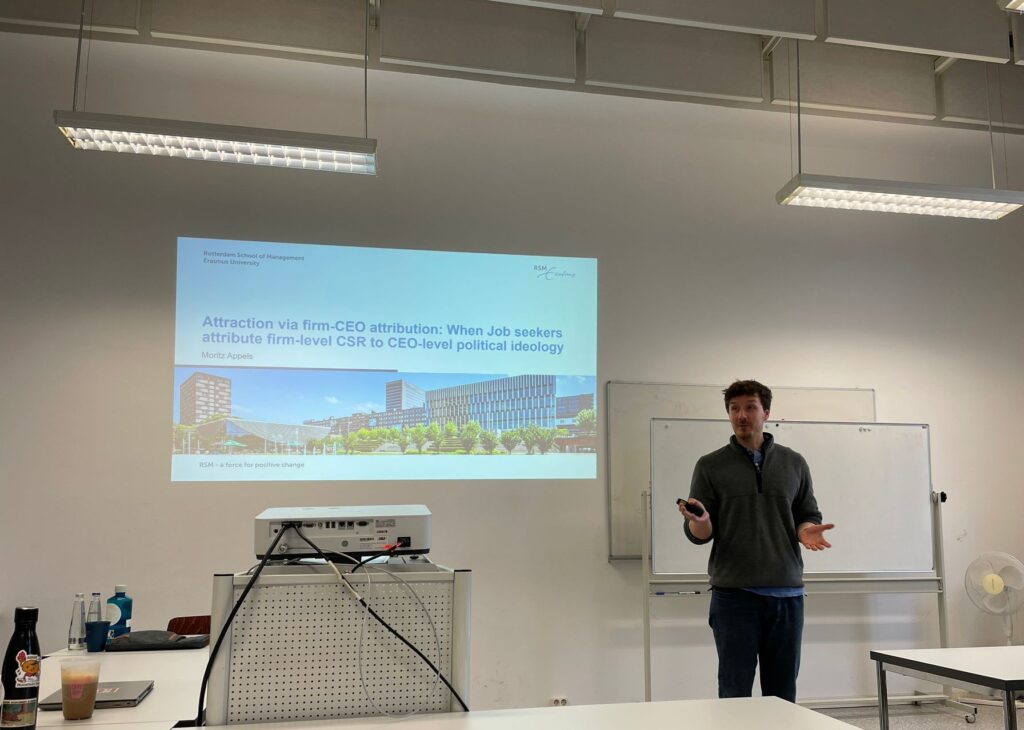
On April 10, we welcomed Dr. Moritz Appels (Erasmus University Rotterdam) to the TransforM Seminar Series in Munich. Dr. Appels is an Assistant Professor of Organisational Behaviour at Rotterdam School of Management, where his research focuses on the relationship between strategic leadership, social evaluations, and broader societal change.


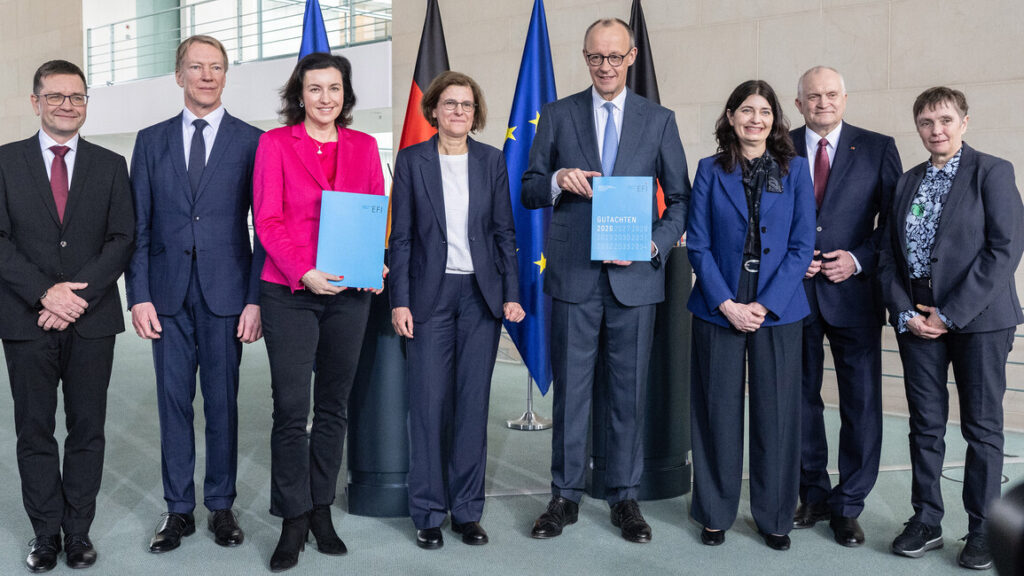
Principal investigator in the TransforM Cluster of Excellence, Joachim Henkel, contributes his expertise in innovation, technology transfer and entrepreneurship to the work ofthe Expert Commission for Research and Innovation (EFI). The Commossion has published its annual report on Germany’s technological performance for 2026. The independent committee regularly advises the federal government on key issues relating to research and innovation policy, and makes recommendations to improve Germany’s position as an innovation hub.
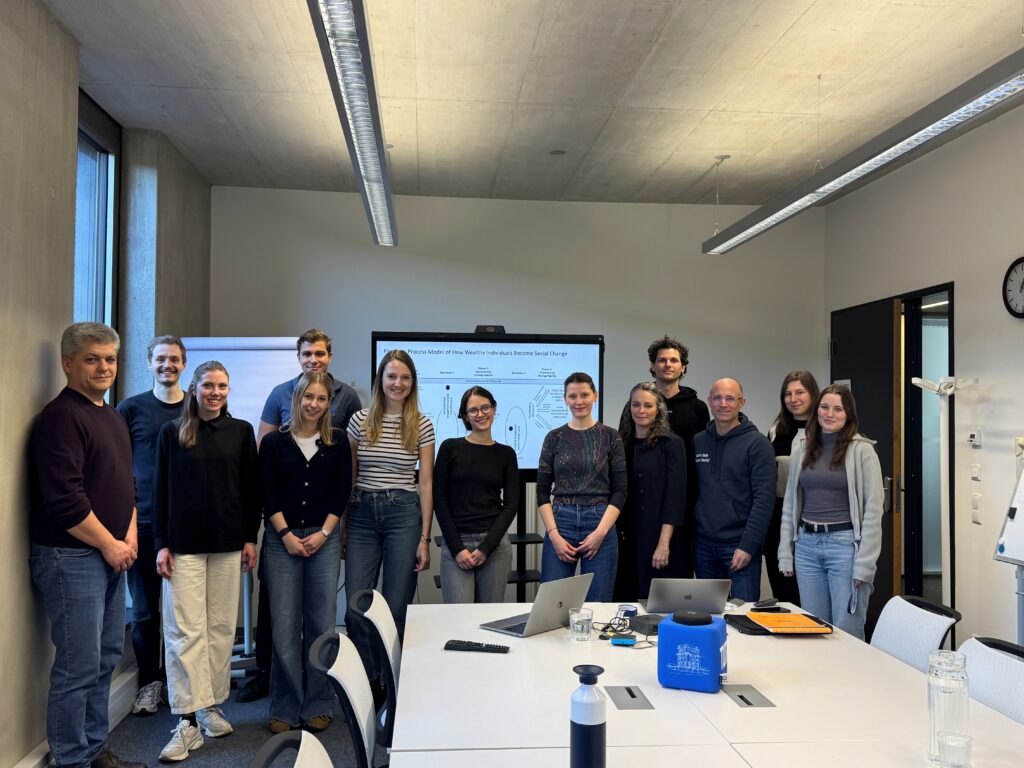
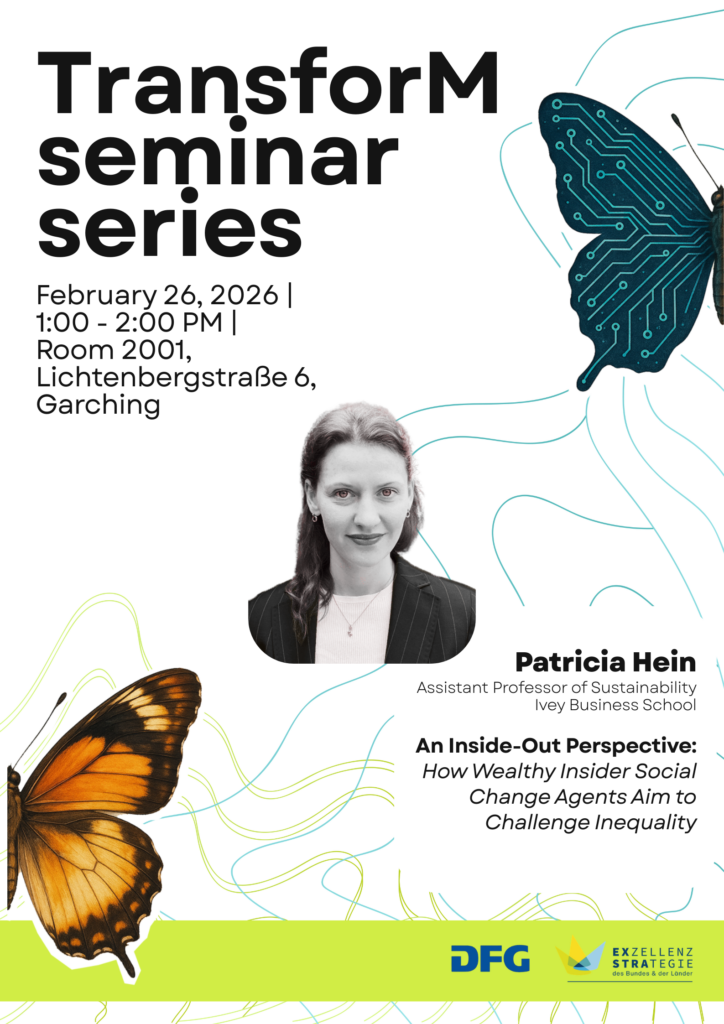
Addressing economic inequality remains a pressing societal challenge, with the top 1% controlling a disproportionate share of wealth in the US and Europe. While prior research has examined income disparities and macro-level wealth concentration, little is known about how wealthy individuals perceive inequality or their potential role in promoting social change.
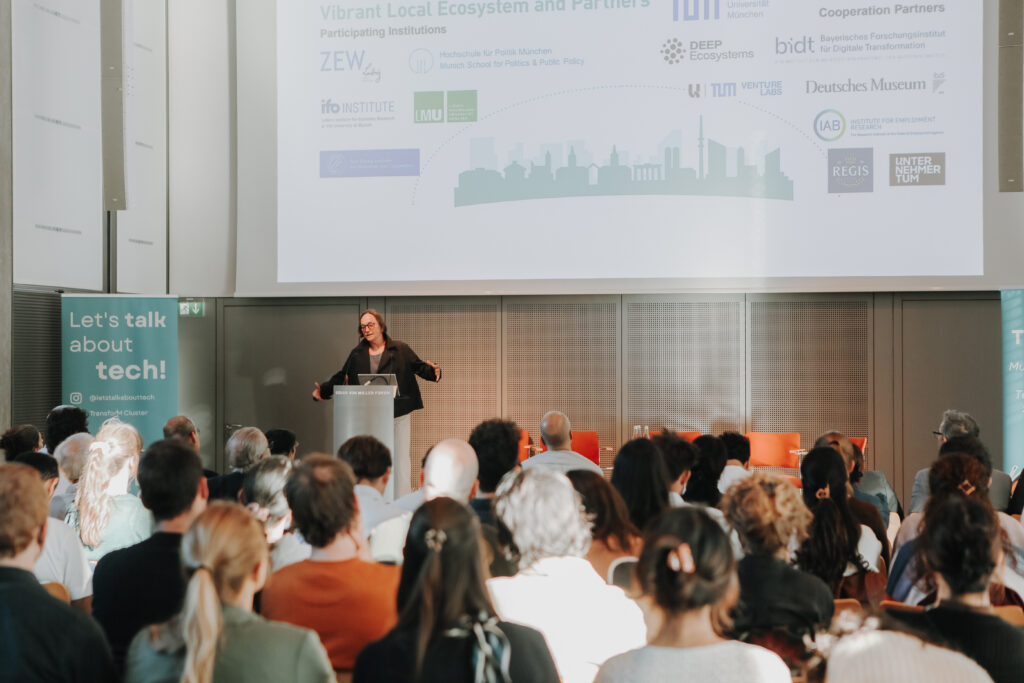
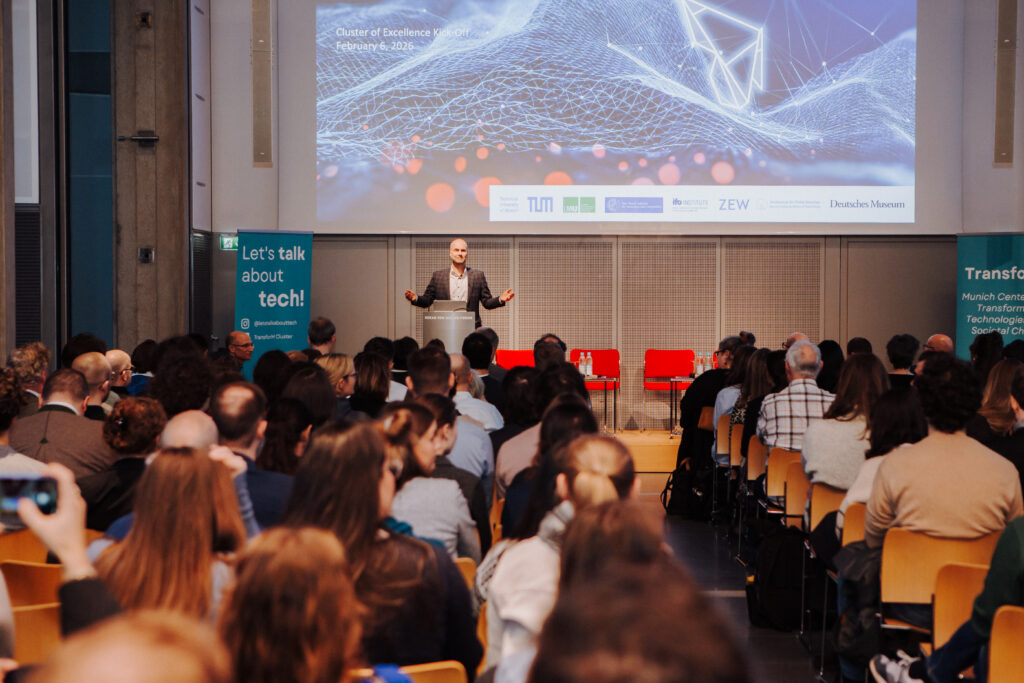
On February 6th, the Cluster of Excellence – Munich Center for Transformative Technologies and Societal Change (TransforM) – kicked off with a public event at the Oskar von Miller Forum.
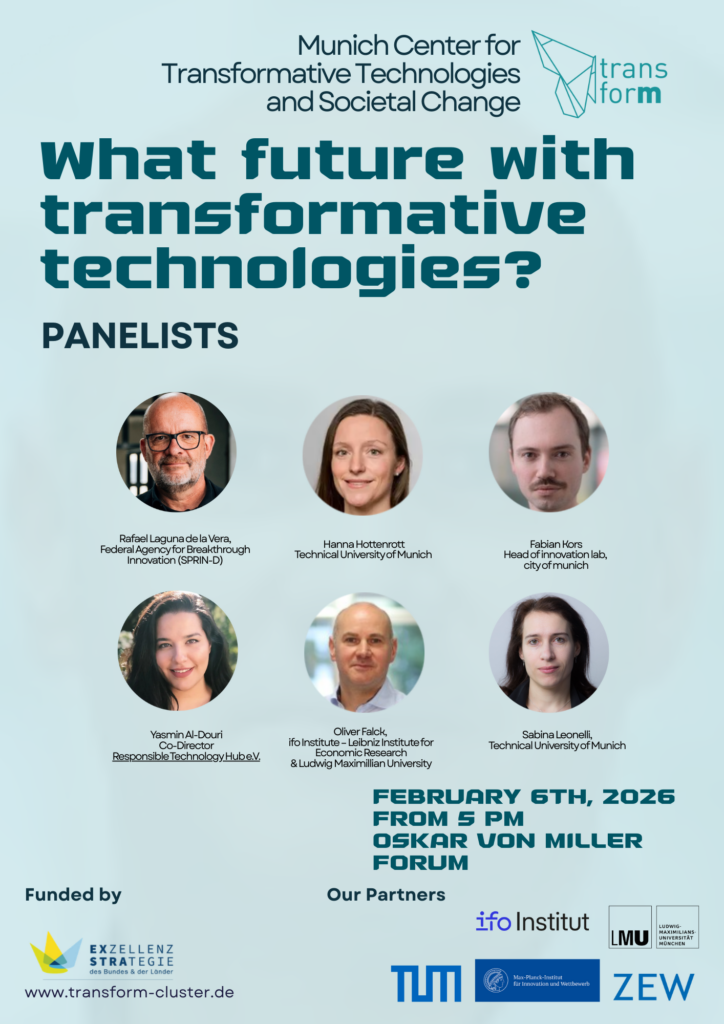
We invite everyone to join our officially kick off event of the TransforM Cluster of Excellence! Join us for a panel discussion and public conversation to kick off seven years of groundbreaking research, Munich-wide institutional growth, and global engagement on which futures we want with transformative technologies and how we can achieve them.
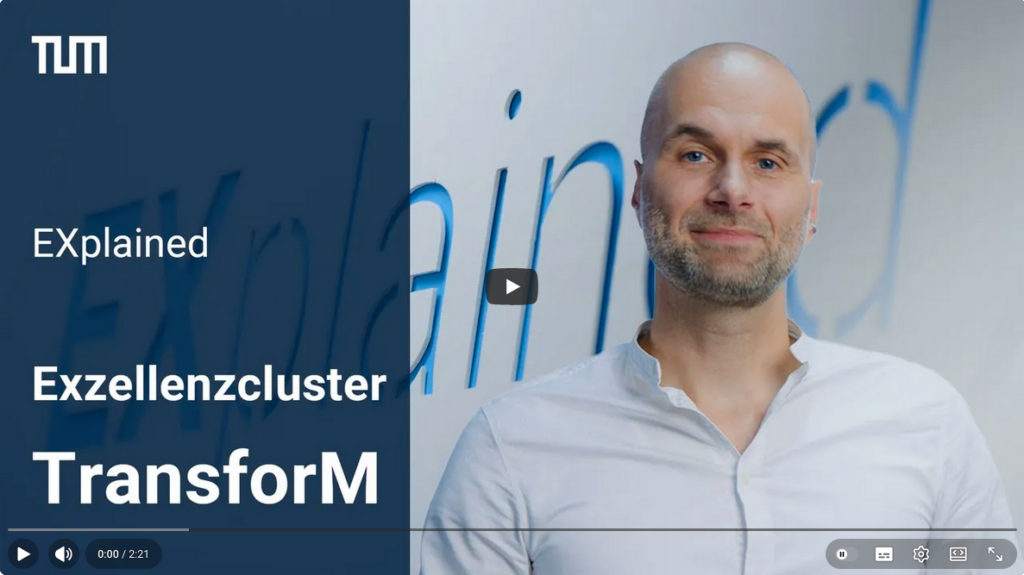
In our “EXplained” video series, we introduce the seven Clusters of Excellence at our university. This time, we take a look at the third newly funded cluster, TransforM, whose spokesperson is Prof. Sebastian Pfotenhauer from the TUM School of Social Sciences and Technology.
Discover job openings within the TransforM Cluster of Excellence, including positions for PhD candidates, postdoctoral researchers, scientific staff, and administrative roles.
Prof. Marcello Ienca was featured in an article on the use of brain recordings in forensic technology.
The publication builds on the approach of embedded ethics and develops it further to enable future projects to effectively deploy it.
The new article by Eric A. Hanushek, Lavinia Kinne, Frauke Witthöft, and Ludger Woessmann, published in Science Advances, discusses longitudinal evidence for age and cognitive skills.
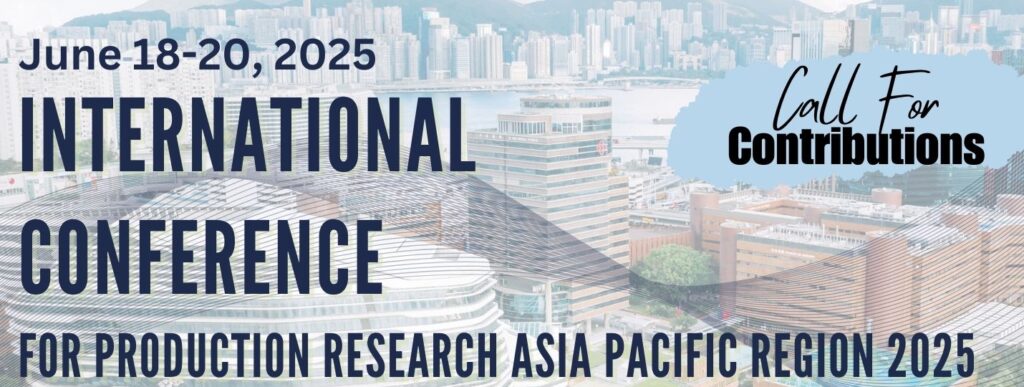
Prof. Stefan Minner will be holding a keynote on the International Conference for Production Research Asia Pacific Region 2025 (ICPR-APR 2025)
A new study by MCube Consulting, commissioned by Zukunft Nahverkehr (ZNV), shows: Public transport generates three times as much economic value for the German economy as it costs.
The article by Stefania Sardo and Sebastian Pfotenhauer studies how competing imaginaries of sustainability have shaped the socio-technical system of diesel cars in Europe, and proposes new policy approaches for systemic phase-out processes.
In his public lecture, Dr. Johannes-Geert Hagmann (Deutsches Museum) sheds light on the groundbreaking developments in laser physics and quantum optics since the 1950s – from the theoretical beginnings to today’s cutting-edge research. The talk is held in German.
In their new study, Shruti Shukla, Ines Böhret, Manzura Jumaniyazova, and Prof. Dr. Janina Isabel Steinert examine how gender transformative interventions (GTIs) reduce adolescent pregnancy in low- and middle-income countries through a realist synthesis approach.
Prof. Marcello Ienca joined a discussion in the TV show “scobel” (3Sat) to discuss ethical questions around emerging neuroscience and neurotechnology.
We were delighted to welcome Prof. Dr. Gesa Ziemer (Head of City Science Lab, HafenCity University Hamburg / Academic Director of the United Nations Innovation and Technology Lab UNITAC) and Markus Mohl (Head of Geospatial Services and Digital Twin Munich, Landeshauptstadt München) who shared insights from their research and practical experience at the intersection of public sector digital transformation, urban digital twins, and collaborative city-making.
For crowdsourcing to be effective, participants need guidance matched to the type of problem they’re trying to solve. The publication by Michael Zaggl, Arvind Malhotra, Oliver Alexy, and Ann Majchrzak explores this topic.
Stefan Minner has been welcomed as Editorial Board Member with Transportation Research Part E: Logistics and Transportation Review. This complements his position as Editor-in-Chief of the International Journal of Production Economics and his Editorial Board memberships with Operations Research, European Journal of Operational Research, International Journal of Production Research, and Review of Managerial Science.
What does it mean to develop, regulate, and apply artificial intelligence responsibly? With this central question in mind, the Center for Responsible AI Technologies (CReAITech), together with the Bavarian Academy of Sciences and Humanities (BAdW), hosted the first international symposium “Responsible AI: Promises, Pitfalls, and Practices” from April 8 to 10, 2025 at the Carl Friedrich von Siemens Foundation in Munich.
Innovations for climate protection often come from “green” start-ups. If the necessary capital comes from both public funding bodies and companies, this increases the chances of a successful market launch. This is shown by a new study by an international research group with the participation of Claudia Doblinger’s professorship at the TUM Campus Straubing.
The article by Ludger Wößmann, published in the Annual Review of Economics, examines the returns to cognitive, personality, and social skills, which are three important dimensions of basic skills.

We advance social science​ for highly technologized societies​ to better understand and shape​ the transformative power ​of technology​.