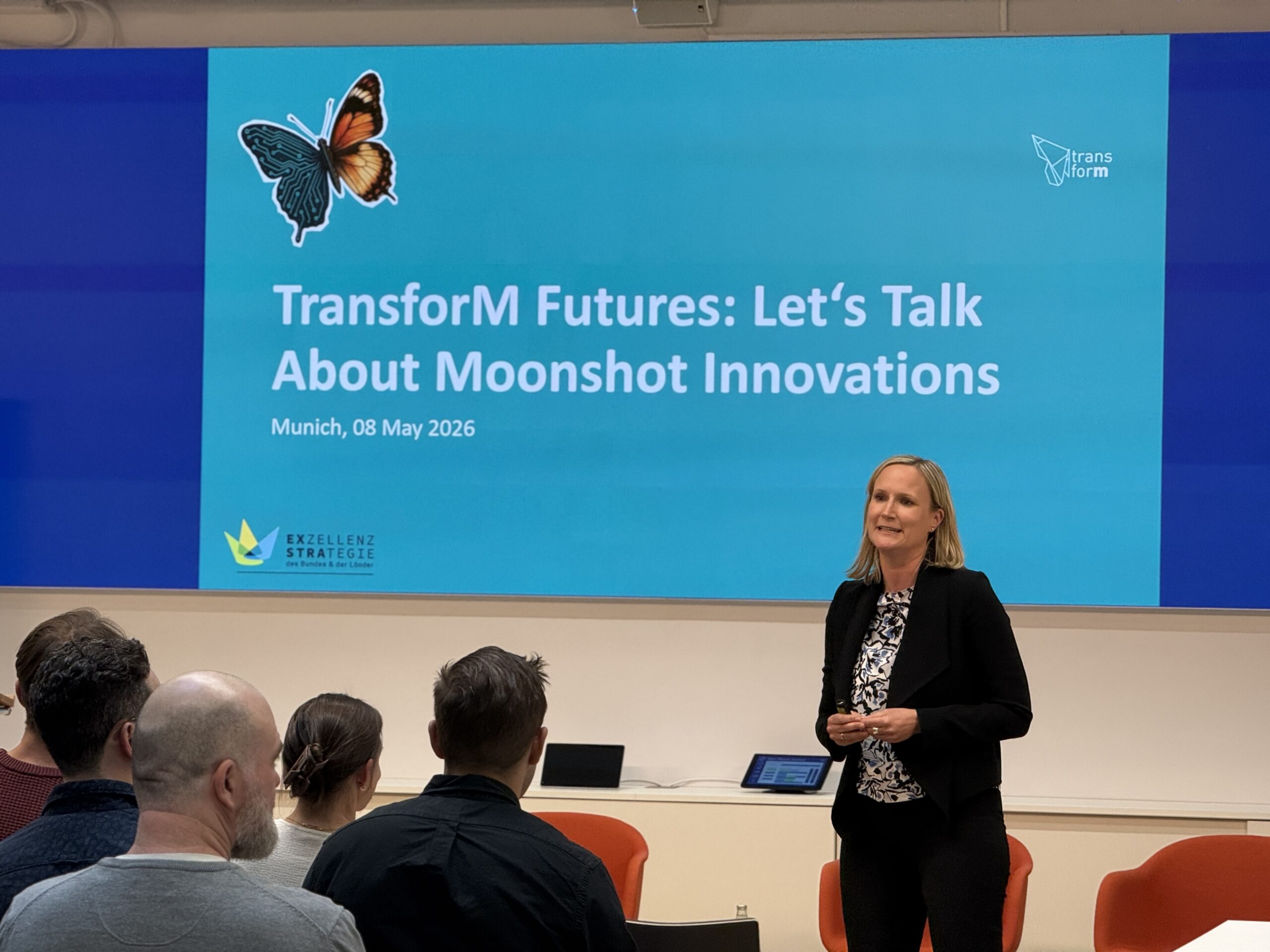
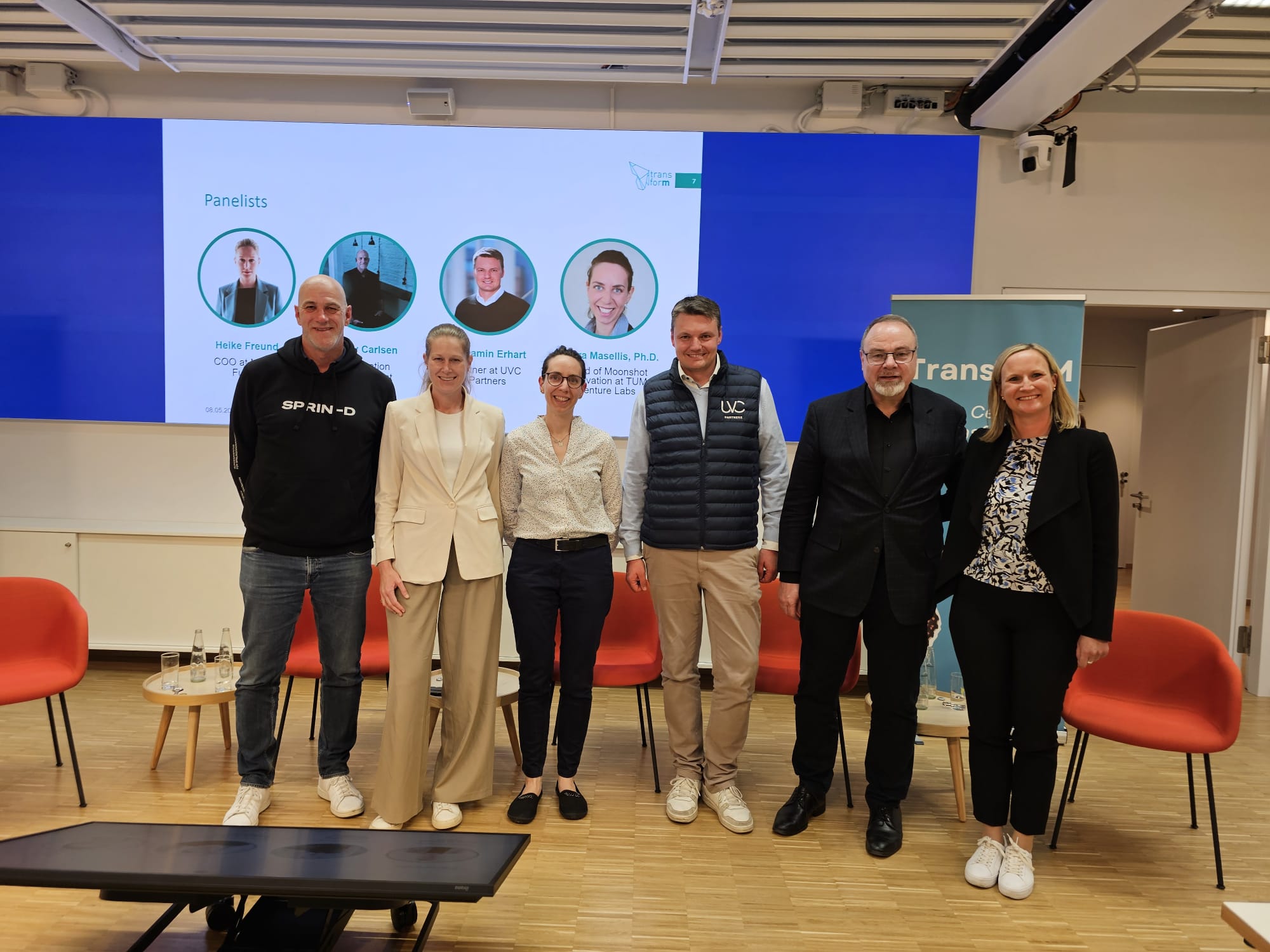
As TransforM Principal Investigator Prof. Claudia Doblinger (TUM School of Management) explained in the introductory talk, so-called moonshot – or breakthrough – innovations are considered high-risk and high impact, where the chance of failure, but also the chance of gaining transformative insights, is substantial.
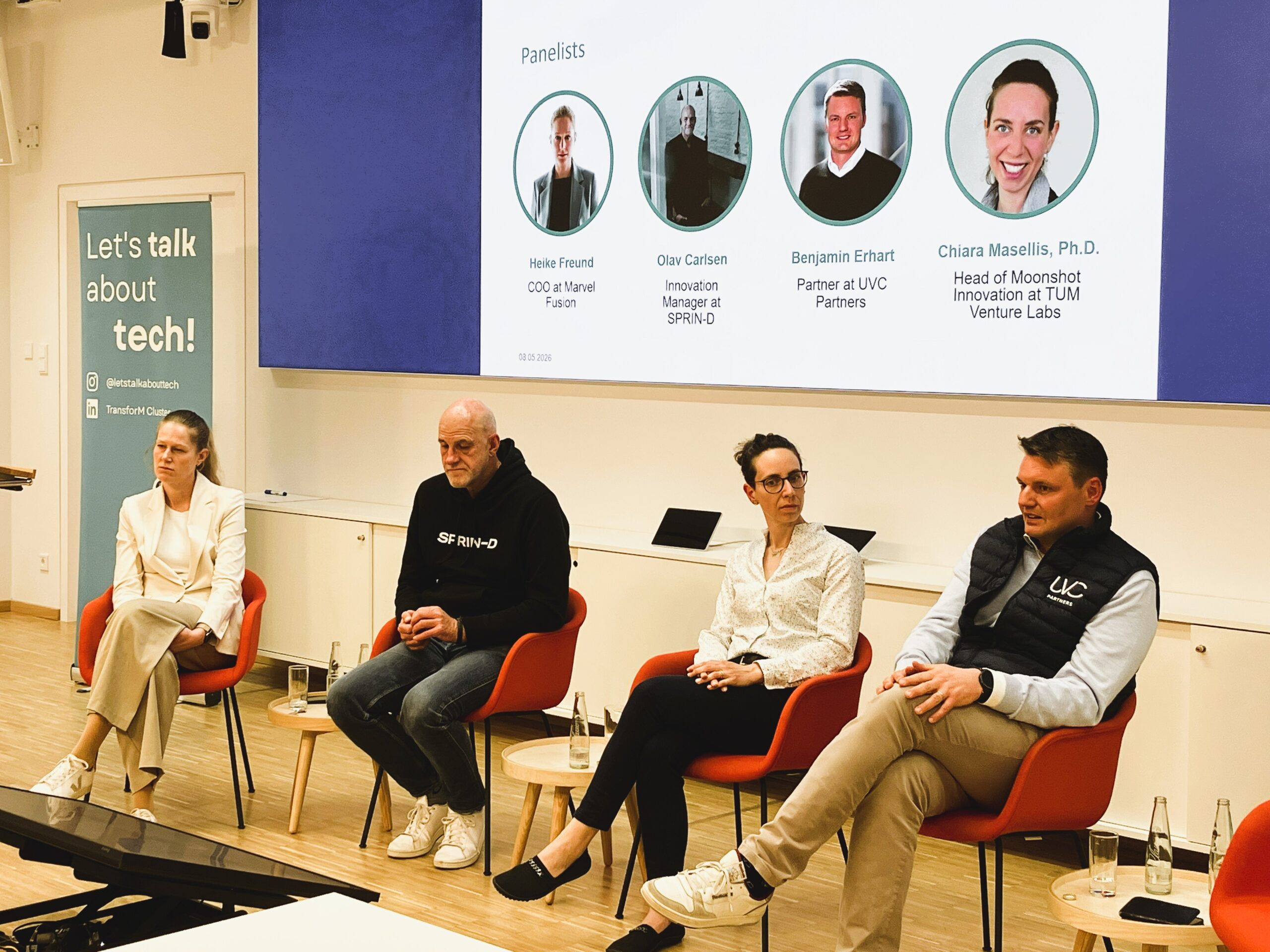
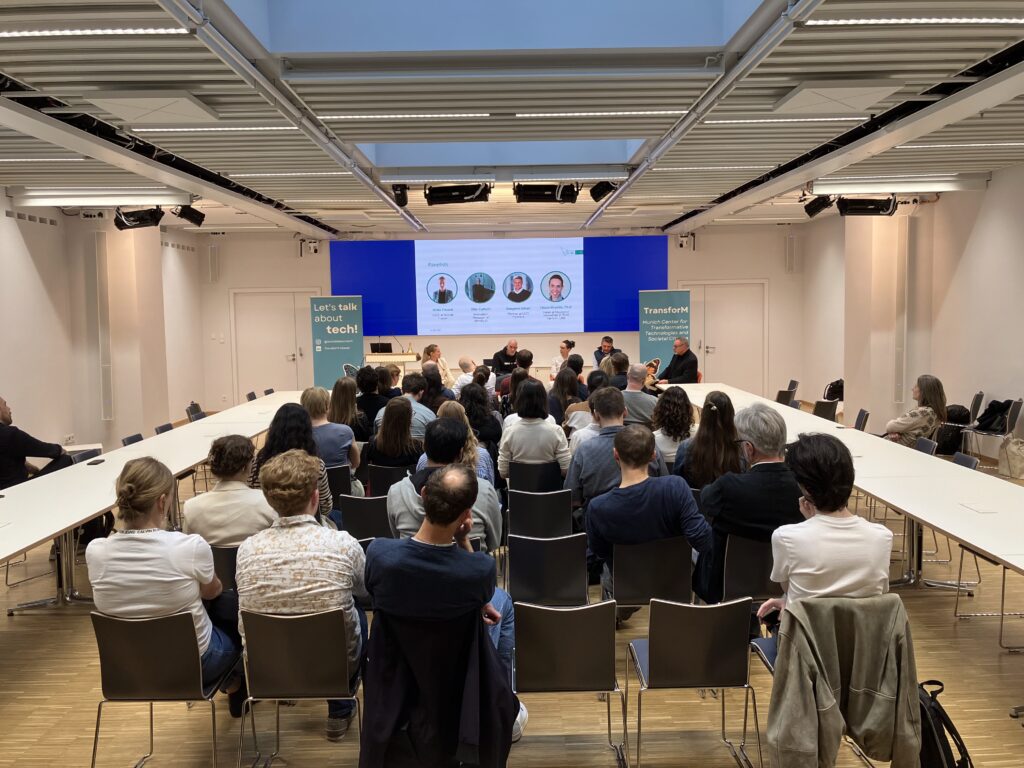
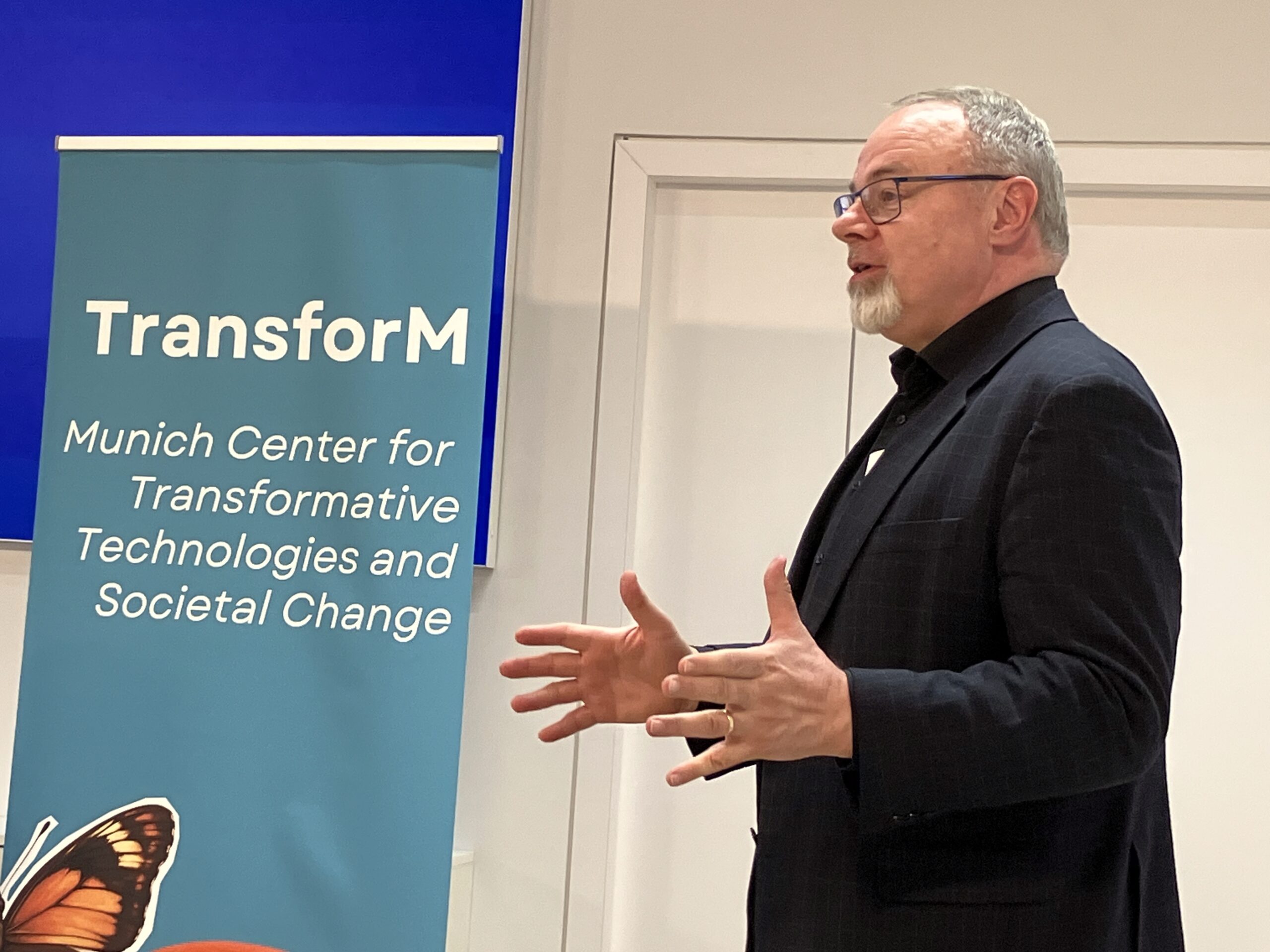
In the following panel discussion, TransforM Principal Investigator and Director of the Max-Planck Institute for Innovation and Competition, Prof. Dietmar Harhoff, was joined by four high-level experts in this topic:
The conversation touched on questions such as how do you deal with the high-risk of financing moonshot innovations? Is there a certain “DNA” or make-up that successful moonshot innovation teams have? Where is the challenge in scaling moonshot innovation, as opposed to more incremental innovations? And what do we risk by prioritizing (or not prioritizing) moonshot logics above other approaches from a societal perspective?
The audience added their own thoughts and questions, focusing on how sustainability criteria are integrated into building and supporting moonshot innovations, as well as how we can make sure we are bringing younger stakeholders along for these important discussions.
Some take aways include:
- The important role of public investment, in addition to private investment, in supporting moonshot innovations, particularly in their infancy. The panellists emphasized the need to capitalize on the skills and passion of often small groups of highly trained people who have big ideas!
- The need to think differently about how to support the scaling of high-risk innovations, given the discrepancy between monetary resources available in, for example, Europe and the US.
- The importance of failure (and not being afraid of it) and how to capitalize upon the knowledge and skills gained in the process of failure to think about future innovations.
- The responsibility to bring society along. Understanding tradeoffs, opportunities lost, and the differentiated impacts of transformative technologies on different groups or future generations is key to getting truly impactful moonshots right.
We thank the panelists, moderators, and our host The Max Planck Institute for Innovation and Competition for an enlightening event. We look forward to seeing many of you at the next TransforM Futures installment!