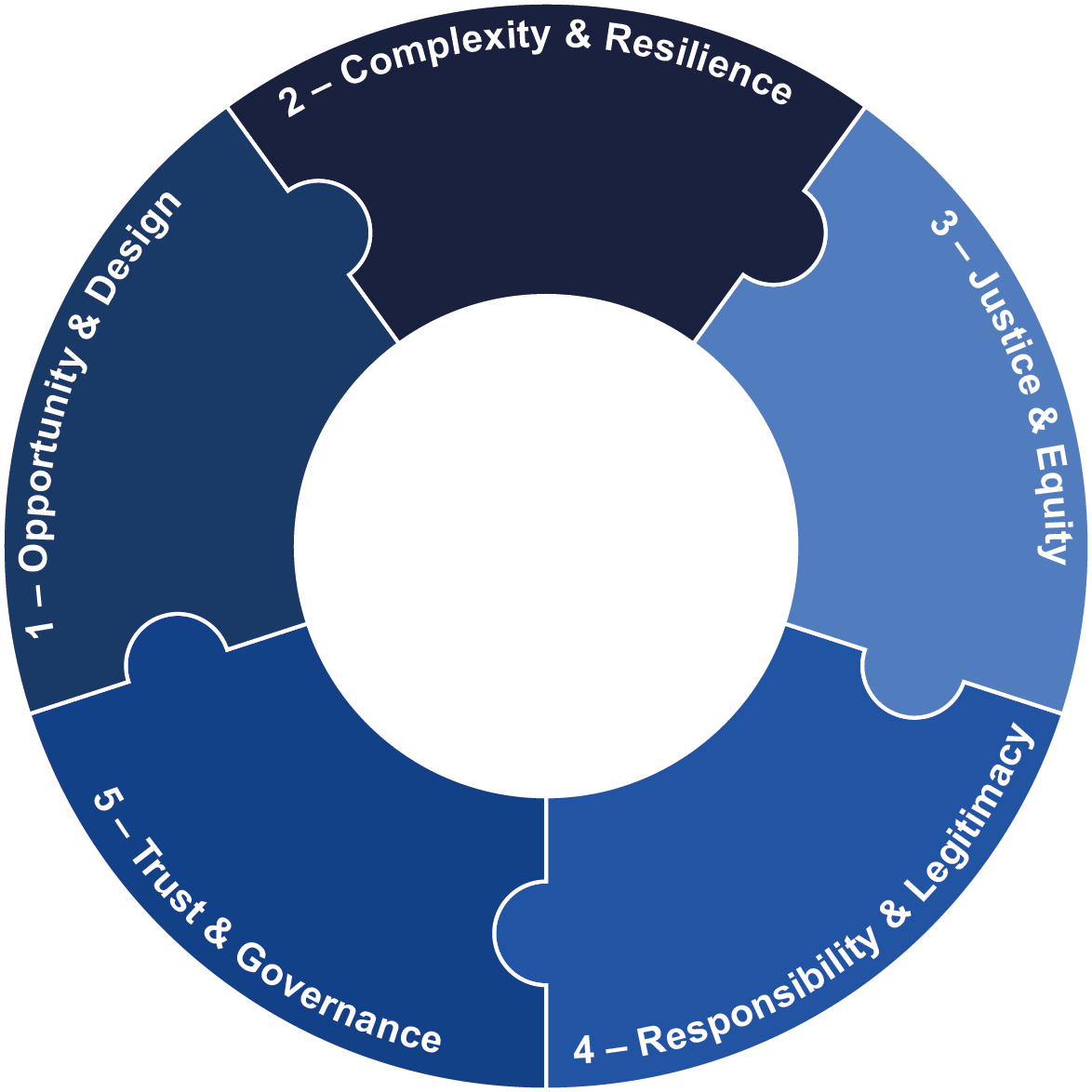
TransforM’s research program is structured around five focus areas that reflect central concerns of the social sciences with regard to technology. Click the wheel to learn more!
FA1 examines how transformative technology create new economic and socio-political spaces, focusing on organizational structures, policies, and their impact on entrepreneurship and user communities. It explores value-based design, ethics, and issues like algorithmic bias. Key topics include opportunity recognition, organizational and policy design, and their role in social change.
FA2 studies transformative technology pathways and their impacts on resilience at individual, organizational, and societal levels. It examines how societies, policymakers, and markets can anticipate, adopt, and adapt to TTs, including managing potential disruptions. Key focuses include impact assessment, organizational and network design, and algorithmic transparency.
FA3 examines how transformative technologies can both advance justice and equity while also deepening inequalities. It analyzes their impact on disparities linked to gender, race, class, disability, and other factors, exploring how inclusive innovation can address these challenges. The focus includes participatory design and equitable development processes to ensure fairer technological outcomes.
FA4 explores how transformative technologies raise new questions about accountability in their development and use, and how these concerns affect the legitimacy of innovators, processes, and governance. It analyzes the political and ethical implications of tech-driven disruptions—such as power concentration in Big Tech—and who gets to authorize large-scale societal changes. The focus includes responsible innovation, corporate accountability, and mechanisms for democratic oversight.
FA5 examines how governance shapes trust in transformative technologies, and how trustworthy technologies enable new governance approaches. It explores the interplay between institutional frameworks and public confidence in emerging tech. This includes analyzing how transparency, accountability, and participatory design can strengthen both trust and effective oversight