Three decades of public engagement research shows that the development and governance of transformational technologies need to systematically involve the people and organizations concerned. However, today, most formats that engage publics around transformational technologies suffer from starting too late or ending too early, as well as from a lack of public and stakeholder diversity.
TransforM’s Public Technology Lab (PTL) has been created to address that. It is a research, engagement, and dissemination platform focused on developing new methods for providing a continuous interface with citizens and policymakers, including through participatory and co-creative innovation methods.
The Lab’s current project will take a converted shipping container on the road, bringing research directly to people. By spending extended time in one place and building real relationships with local communities, researchers can learn from and with the public, using new participatory and co-creative methods of innovation.
“If we want conversations about complex topics related to technology to become more approachable, we can’t expect people to come to university campuses,” says Mandy Geise, PTL team member. “We have to meet people where they live, work, and gather.”
Before taking the container on the road, the PTL team faced a design challenge: what should the space look and feel like? Prof. Annette Diefenthaler explains: “Where and how researchers show up shapes who gets curious, and who feels welcome to take part – or not. It’s not just about designing a space, it’s designing a holistic experience so that researchers and the public can start an authentic and honest collaboration.”
Throughout the summer semester of 2026, three student teams worked closely with researchers and members of the public to prototype potential environments. In the context of the course “Designing Experiences through Prototypes” – a collaboration between TransforM and the Munich Design Institute (MDI) – the teams developed full-scale models which were showcased at TUM’s Design Factory 1:1.
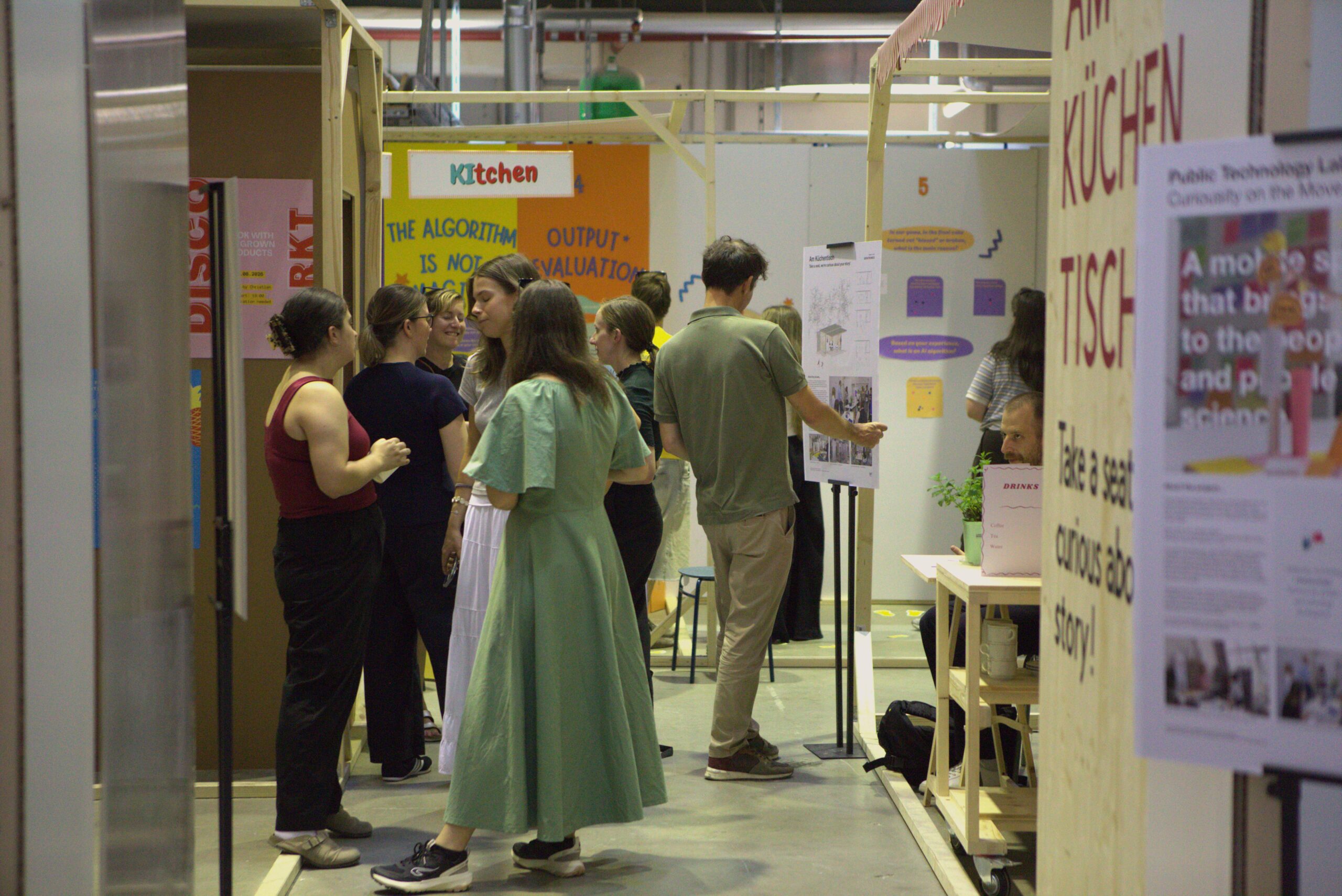
After different publics, designers and researchers experience the full-size prototypes, the elements they consider most conducive will be included in the final design of the container. This will ensure it stays responsive to the researchers and the publics it serves. While the setup of the PTL remains flexible, the goals guiding it are clear:
Over the course of the next years, these goals will translate into individual projects in different places, contexts, and formats, taking TransforM researchers on the road to explore how transformational technologies can be designed to be more inclusive, situated, and responsive.