
International collaboration in research and innovation lets us tackle problems that no single group, or even sometimes one country, could solve alone. It plays an important role in bringing the knowledge, resources, and capabilities of diverse research teams together.
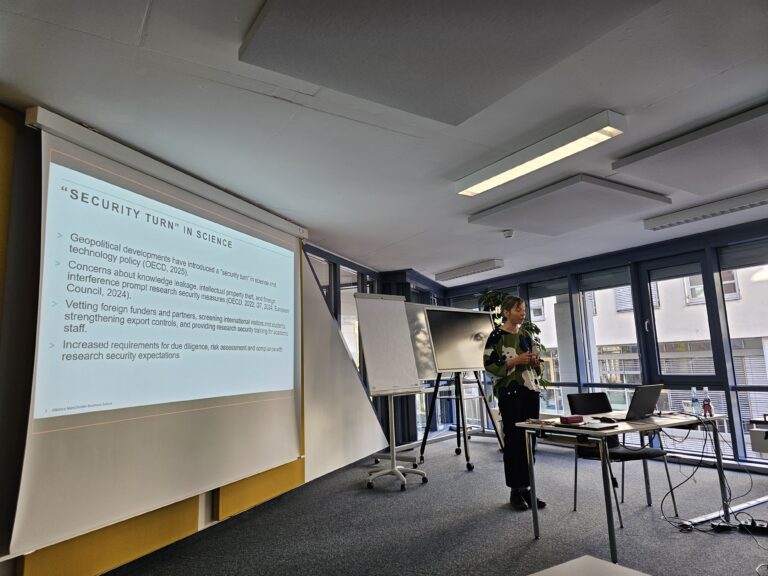
But the conditions for working across borders are changing. Geopolitical developments have brought a “security turn” to science and technology policy. Concerns about knowledge leakage, intellectual property theft, and foreign interference have led to growing research security measures. These measures create new obligations for academics pursuing cross-border partnerships.
Cornelia Lawson, Professor of Economics of Science and Innovation at the Manchester Institute of Innovation Research (MIOIR), has studied how research security is being implemented in the UK and other countries.
Her work asks whether these practices actually inform decisions about international collaboration, and whether they lead researchers to change, or even abandon, their international partnerships.
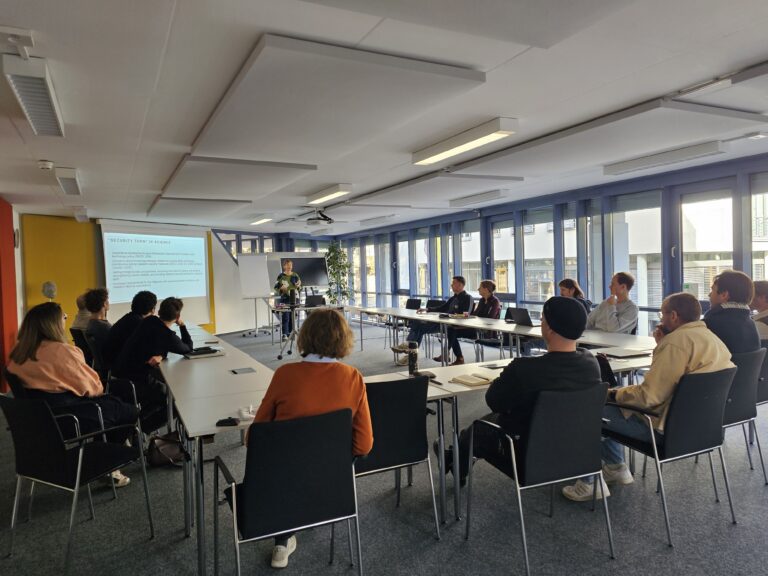
Lawson presented her research at the TransforM Seminar Series, this time co-hosted with ZEW – Leibniz Centre for European Economic Research. A diverse group of researchers from across the TransforM Cluster joined the seminar in Mannheim and online.
Pressure works, but only so far. Researchers comply with research security measures, but mostly because of perceived pressure from government, senior management and funders, not out of conviction.
Peers matter most. Colleagues’ behavior shapes what researchers do, even when it feels costly.
Clarity is missing. Researchers report only moderate confidence in handling research security, and interviews point to unclear guidance and excessive complexity.
The takeaway: Research security needs to be communicated in terms of its academic benefits. The aim should be making it something researchers see as part of good academic practice, so that it becomes a professional norm rather than a box to tick.
The seminar closed with a discussion on how research security practices and attitudes differ across countries such as Japan, Germany and the UK. In some of the countries examined, awareness of research security issues is emerging and pressure to respond is growing, but capacity is still limited. Others have perhaps a longer history of dealing with these topics and have gone further to adopt and embed security policies and risk management practices. Lawson noted, however, that no country has yet institutionalized research security across its entire research system.
Further reading: Building Resilience in International Research Collaboration: Evidence on research security awareness, practice and behaviour change among UK academics