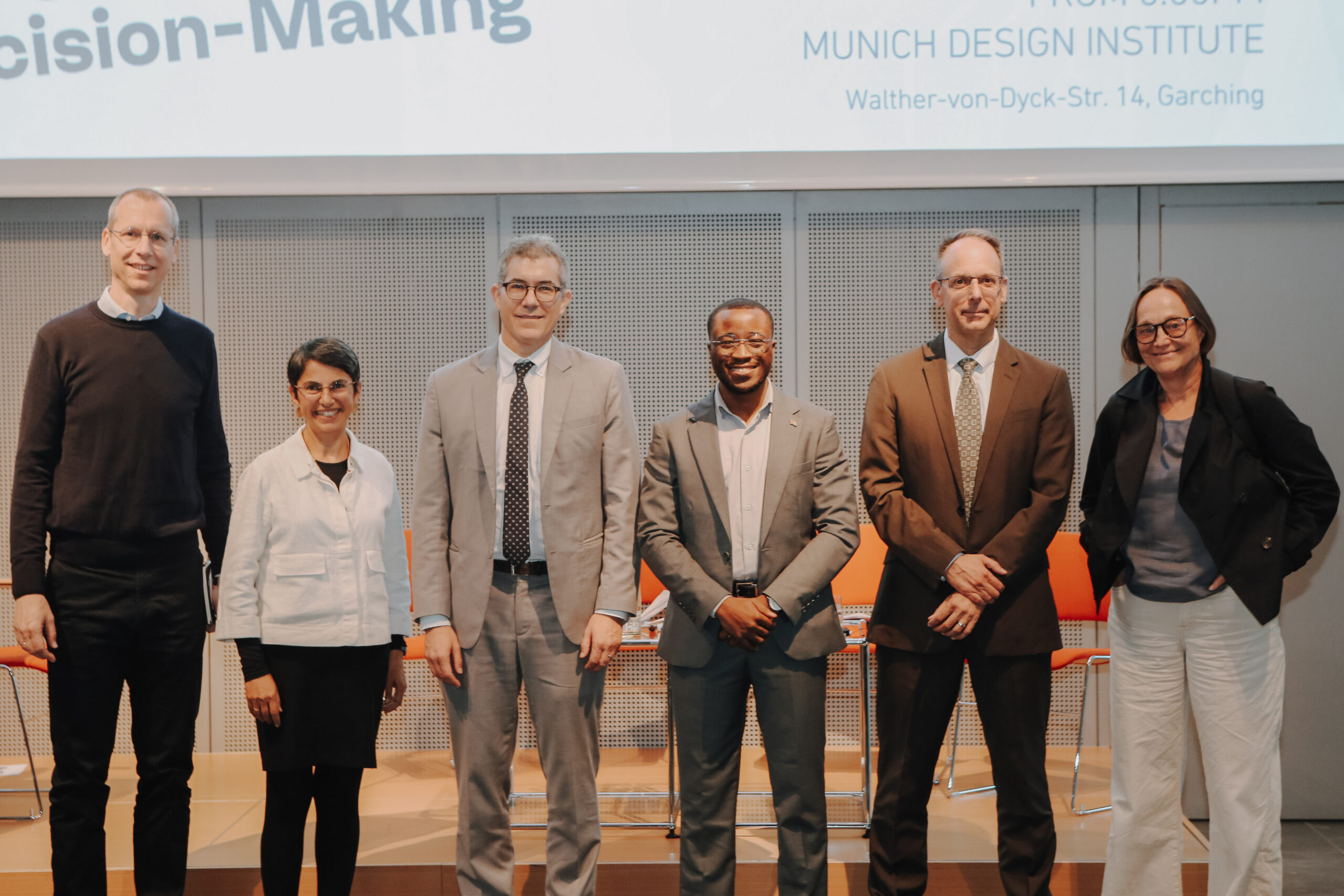

Decisions about technology affect many aspects of everyday life, but the public is not always part of those decisions. How can we ensure that innovation and technological transformation impacts society in truly productive and positive ways? And how can public concerns be better reflected in decisions about technology? These questions were at the center of the TransforM Futures event on 23 September in Munich.
TransforM Principal Investigator (PI) Silke Beck (TUM) kicked off the event by highlighting the clusters’ work on public interest technology. She emphasized that addressing today’s complex societal challenges requires new ways of involving the public in decisions about innovation and technological change.
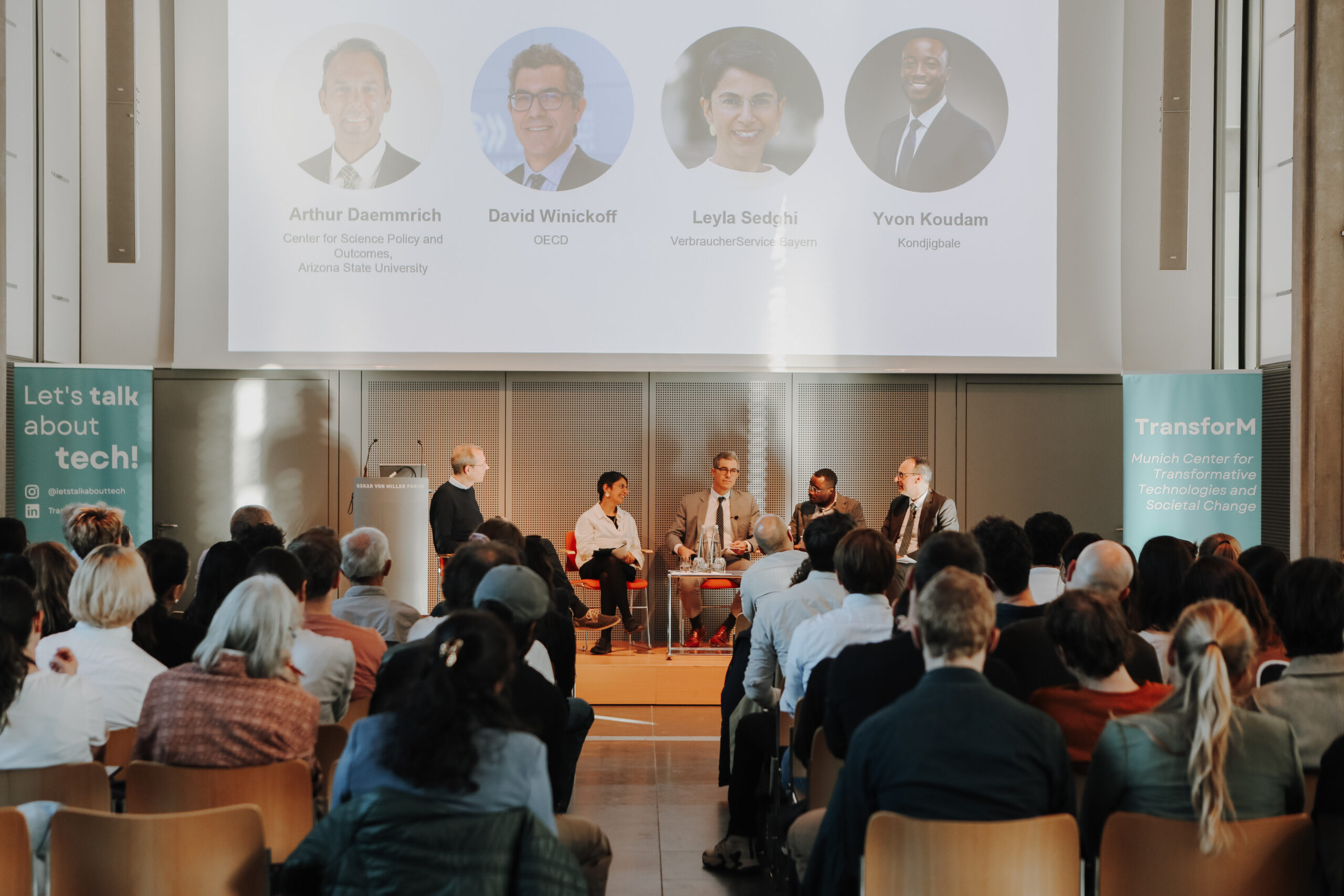
The discussion that followed, moderated by TransforM PI Jörg Niewöhner (TUM), brought together Arthur Daemmrich (Consortium for Science Policy and Outcomes, Arizona State University), David Winickoff (OECD), Leyla Sedghi (VerbraucherService Bayern), and Yvon Koudam (Kondjigbale). Despite working in very different contexts, from consumer advocacy in Bavaria and science policy in the United States to healthcare innovation in West Africa and international technology governance, the panelists converged on three key points:
Public engagement, in Leyla Sedghi’s experience, begins with clear communication. Drawing on her work at VerbraucherService Bayern, an independent, non-profit organization where consumers can receive neutral information, education and legal advice, she argued that innovation can only serve the public if the public understands it. Even the most promising technologies risk losing trust and support when their benefits, limitations, and implications remain inaccessible to the people they are intended to help.
A similar perspective has shaped the work of Yvon Koudam, Co-founder and CEO of the digital health platform Kondjigbale in Togo. He explained that working across West Africa means operating in many different languages. The company invests a lot of time helping people understand the tools available to them and how to use them. Making innovation accessible, he argued, starts with making it understandable.
A technology that succeeds in one place may fail in another. Arthur Daemmrich highlighted how public perceptions of technology are shaped by local experiences, histories, and priorities. As Director of Arizona State University’s Consortium for Science Policy and Outcomes, he has helped develop approaches that bring citizens and other stakeholders into science policy discussions. Questions of what serves the public interest, he argued, can look very different at the city, national and global levels. Communities’ previous experiences with technology also shape how new innovations are understood, trusted, and adopted.
If communities’ experiences shape how innovations are received, then developers need to understand those experiences before building anything. For Koudam, this begins with three questions his team asks before introducing a digital solution: Who are we building for? Who can afford to access it? And who might be left behind?
The answers often challenge assumptions about innovation. In some settings, a telephone helpline or mobile banking service may deliver greater impact than a sophisticated smartphone application. What matters is not novelty but whether people can realistically access and benefit from the technology.
Clear communication and a good understanding of context lay the groundwork for public engagement. But reaching the public more effectively also depends on a policy environment that makes this kind of dialogue possible. David Winickoff drew on his experience leading the Emerging Technologies Unit at the OECD to address what makes “good” policy on innovation in the public interest. He stressed that the different ways of engaging the public, from gathering information to running consultations and promoting participation, all require tested methods and procedures. A repository of what has worked well (and what hasn’t) in past policies would be an essential asset, giving policymakers an evidence base to get it right.
Evidence alone is not enough, though. Winickoff also stressed the need to bring people together across networks early on and to invest in relationships across disciplines and communities, so that everyone works toward the same policy goals.
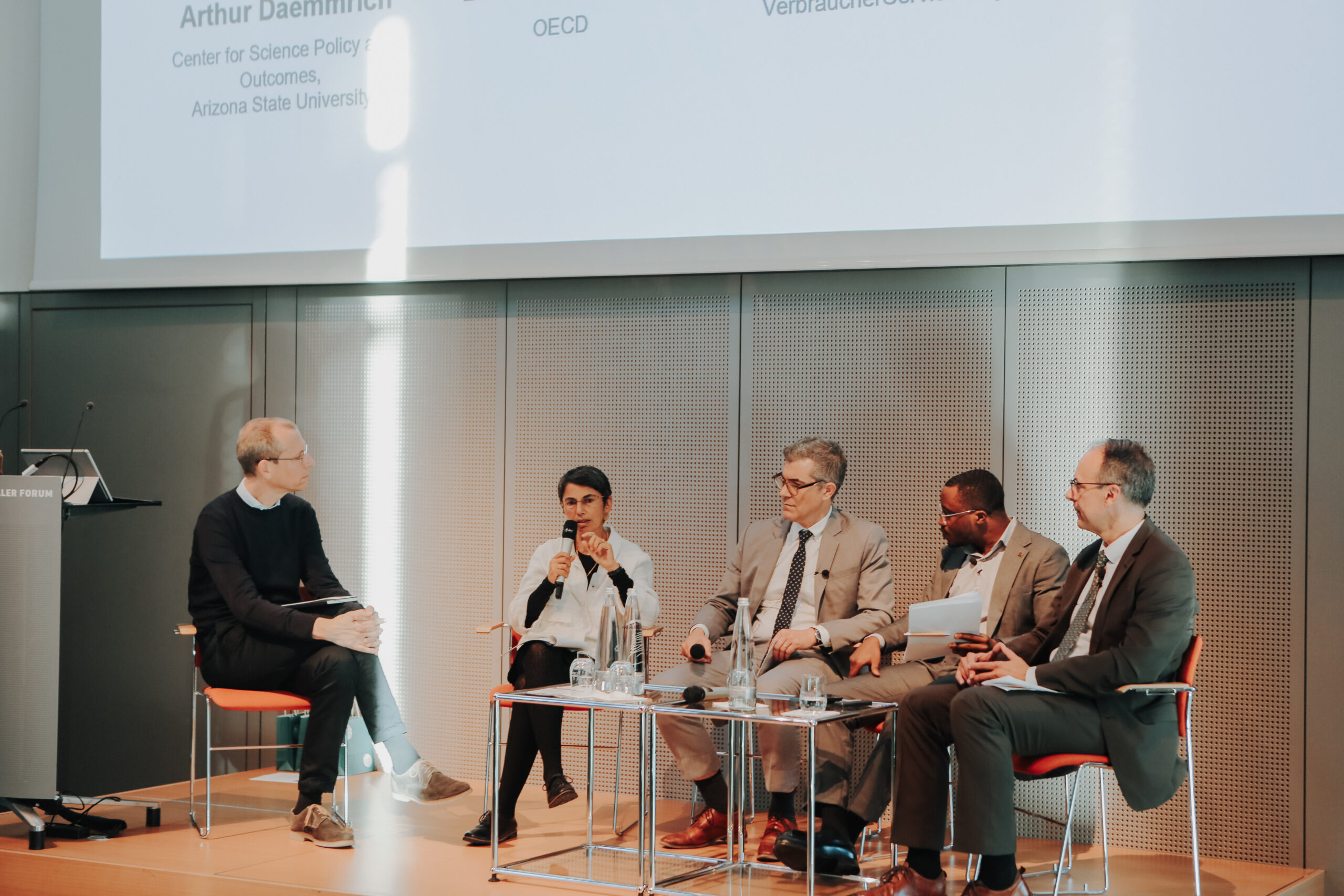
Despite their different backgrounds and experiences, the panelists shared a common message: innovation that serves the public cannot be developed without the public. Their discussion pointed to three ways to support it: communicate clearly so that innovation is understandable, take the local context into account, and back engagement with policies that make it possible.
Thank you to our panelists and to everyone who joined the discussion. We look forward to continuing the conversation on transformative technologies at the next TransforM Futures event.