

What happens to knowledge when more of the work of seeing, sorting, comparing, and predicting the world is mediated through computational systems? And where, amid the apparent technical complexity of algorithms and AI, do choices enter that change how we know the world?
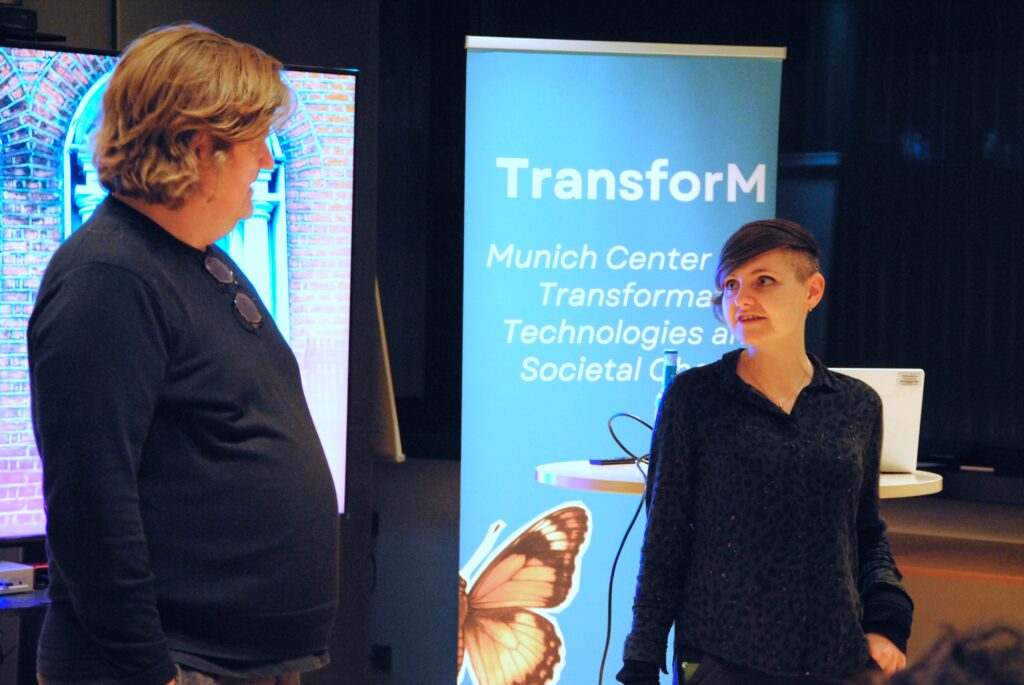
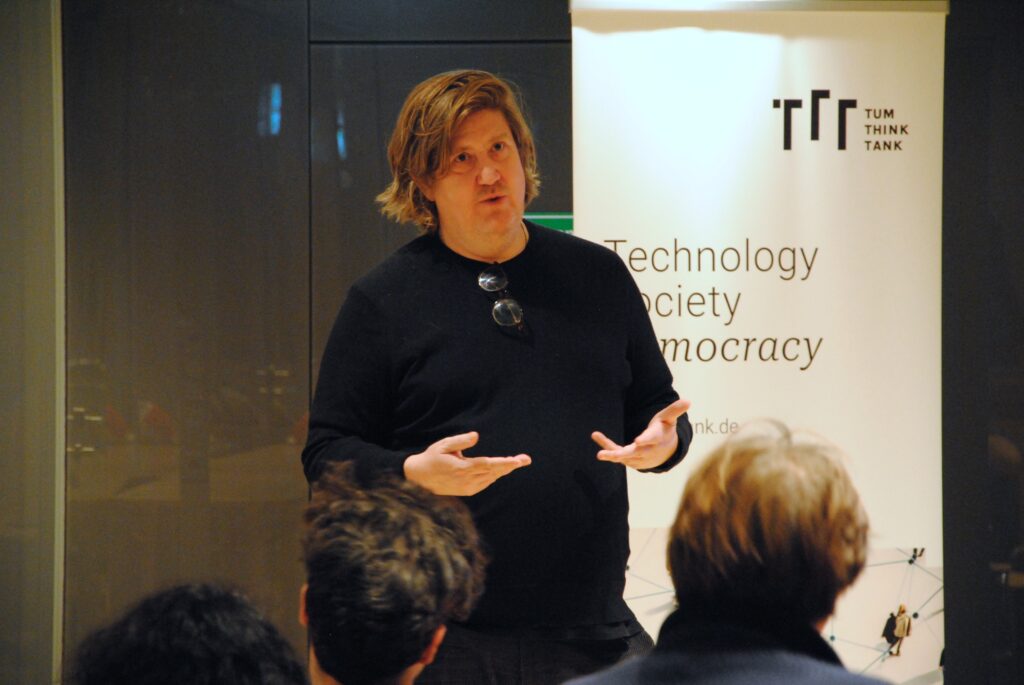
These questions were at the center of “A Moment of Choice: Knowledge Production in an Age of Computation”, a recent TransforM Seminar Series event with Prof. Dr. Francis Lee of Södertörn University (Sweden), hosted by the Science and Technology Policy group at the TUM Think Tank. The seminar brought together participants with backgrounds in Science and Technology Studies (STS), anthropology, the life sciences, law, and other fields to ask how computation is changing how we know the world – and what our role of researchers is in working with and analyzing computational systems.
At a moment when artificial intelligence is surrounded by both glittering promises and dramatic warnings, Lee proposed a different starting point: Where could things have been otherwise?
“It could be otherwise” has long served as a rallying cry against technological determinism. Lee brought this sensibility into the study of computational knowledge infrastructures by drawing attention to moments of choice: points at which classifications are established, thresholds set, some phenomena made visible, and others allowed to disappear.
Lee’s talk took us through vignettes from Zika risk assessment, AI-generated synthetic data in medical research, and DNA-based mycology. They showed just how consequential choices embedded in computational systems can be. They shape how disease risks are assessed, which populations appear in research data, or where the boundary between one biological species and another is drawn.
Yet once these choices become embedded in computational infrastructures, they can easily appear as properties of “the data” or outputs of “the algorithm.” One task for social scientists, Lee suggested, is to make them visible again.
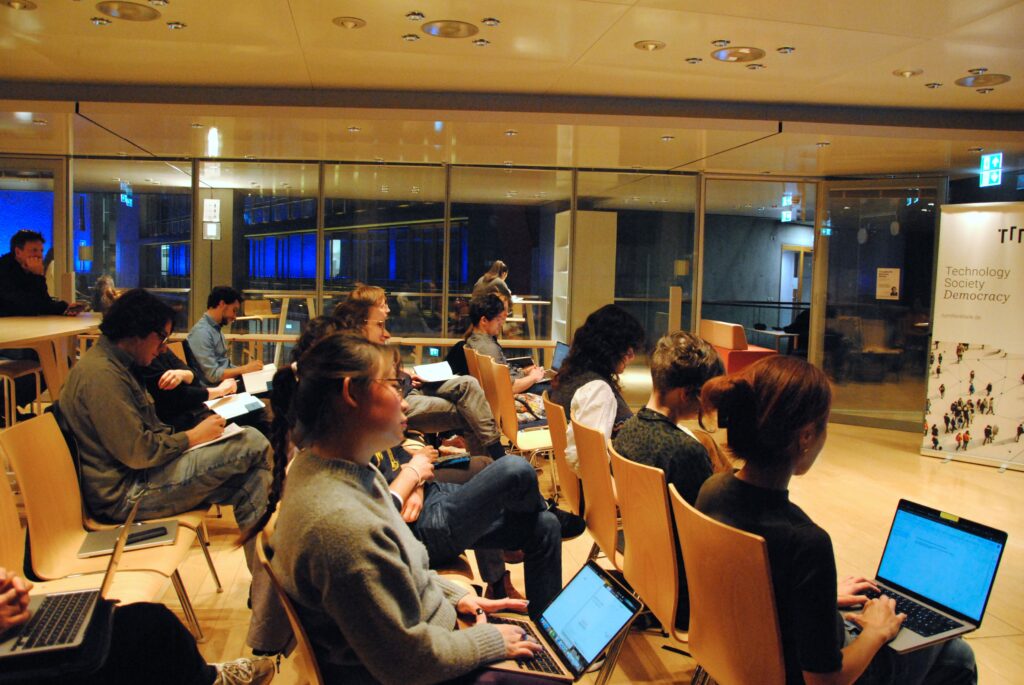
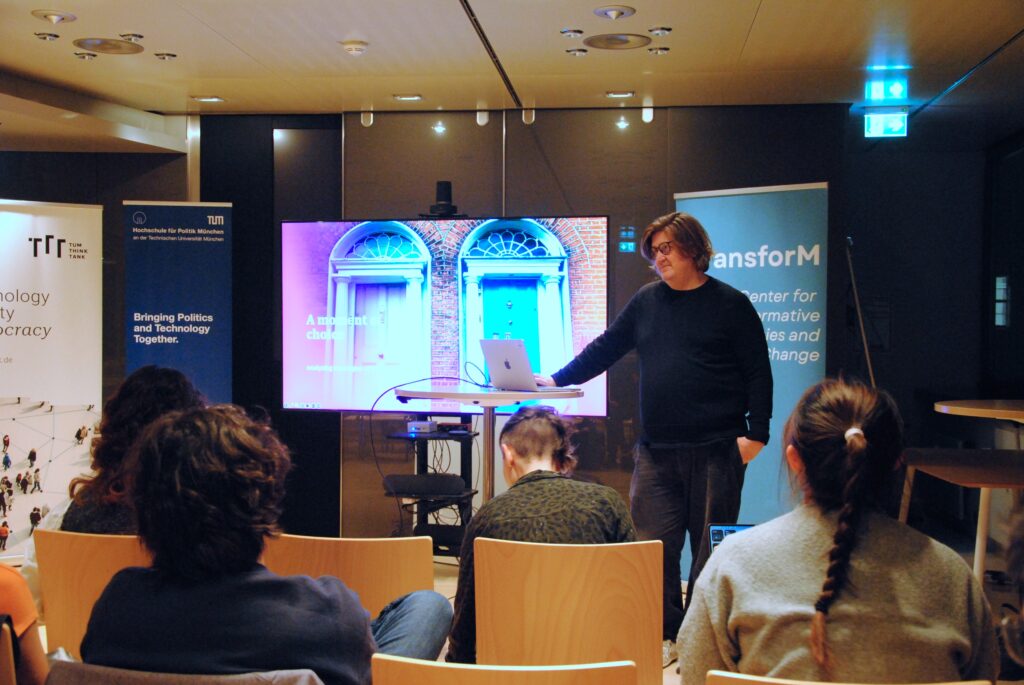
To think about where choice resides, Lee introduced topologies of agency as a concept. Rather than asking whether “the human” or “the algorithm” has agency, we can map how possibilities for acting, judging, and choosing are distributed across an algorithmic assemblage.
Agency does not sit neatly in one place. It may be concentrated with researchers when they select data or establish classifications, move into technical standards and models, and then narrow again when users encounter an apparently fixed computational output. Lee’s work articulates how spaces for intervention open and close at different points in algorithmic assemblages and affect actors differently.
Thinking in terms of topologies therefore directs attention to where choices remain possible, for whom, and where they have become difficult to see or contest. It also challenges familiar accounts in which algorithms themselves become the singular source of decision-making power.
The discussion after the talk explored what it might mean not only to critique these computational arrangements, but to engage with them more carefully.
If we want to engage in more caring computation practices, we need to remain attentive to the choices, relations, and consequences hidden by apparently seamless computational outputs. Caring here means resisting the temptation to treat algorithms as isolated technical objects and instead asking what they depend upon, what they exclude, and what alternative choices might have been possible.
This reflexivity also applies to social scientists themselves. The concepts we use shape what we can see. One memorable point from the discussion was that productive concepts create enough friction between our theories and the objects we study to reveal something new. If our analytical language simply reproduces categories such as “AI,” “algorithms,” or “data” as they are presented to us, we may inadvertently accept the boundaries constructed by the systems and actors we seek to analyze.
This concern with contingency speaks directly to TransforM’s ambition to understand why, when, and how technologies become socially transformative, while developing social-scientific approaches capable of critically assessing and informing those transformations.
The seminar showed that technological transformation is sometimes made through mundane decisions: choosing a threshold, defining a category, constructing a dataset, or distributing opportunities for judgment between people and machines.
Tracing these moments – and the topologies of agency they produce – helps us understand technologies, and the worlds they create and help see, as continuously being made through choices that might, at least at certain moments, be made differently.
Taking that contingency seriously opens space for what Lee calls a reflexive ontological politics of computation: examining how computational systems participate in making worlds while keeping alive the possibility of making them otherwise.