Quantities and kinds of wildlife everywhere are decreasing rapidly. This global decline of wildlife populations has been accompanied by a radical acceleration in the quantity and types of data being collected about animals. Wildlife are increasingly datafied (that is, subject to data gathering and surveillance, made measurable and quantifiable) through new technology such as AI, machine learning, and tracking devices.
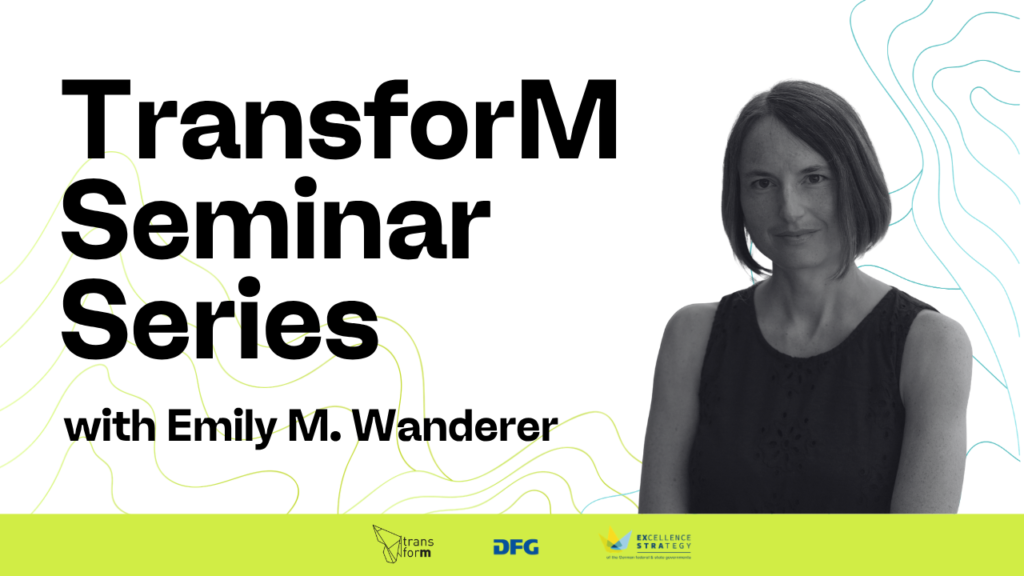
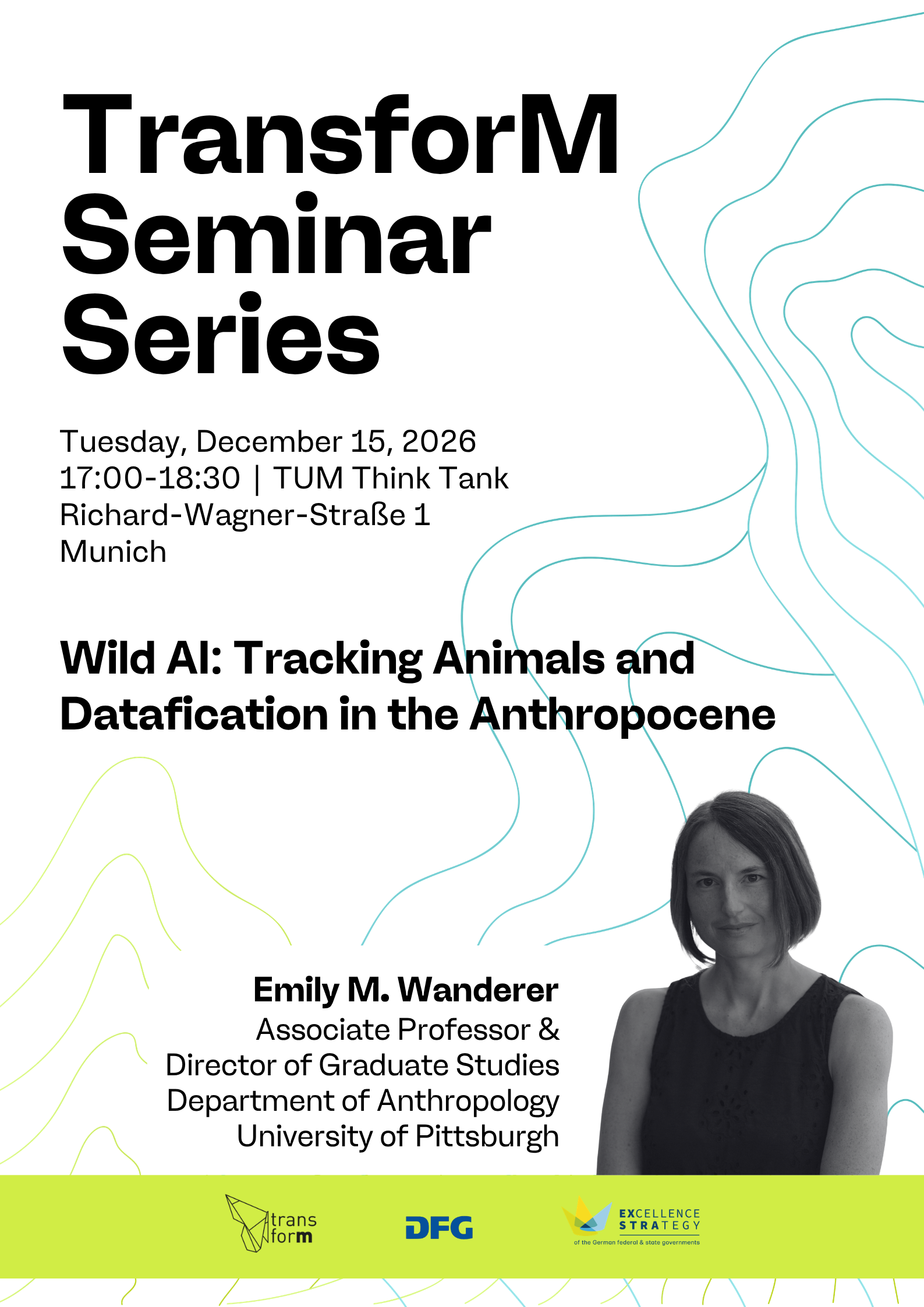
Emily M. Wanderer, Associate Professor & Director of Graduate Studies at the Department of Anthropology at the University of Pittsburgh, will join the TransforM Seminar Series to talk about the datafication of wildlife and its consequences.
Drawing on ethnographic research with ecologists, computer scientists, and wildlife managers, Wanderer follows what practitioners often call “the data pipeline”: data about wildlife, from its production by ecologists in the field to its consumption and use by scientists and computer engineers in machine learning and AI programs.
While this metaphorical pipeline is often represented as the means by which data extracted from the activities and bodies of wild animals may seamlessly transition to computational analysis and prediction, Wanderer analyzes the messy materiality of this transfer: to extend the pipeline metaphor, she shows how the demands of pipeline construction are reshaping scientific practice as well as the leakages, intrusions, and unexpected twists and turns that data takes as people, technology, and wildlife come together to craft and analyze it.
She considers what it means for AI to be produced outside of the for-profit world of big tech, and investigate the ideas, cultural categories, and histories that shape machine learning and AI about non-human animals and their consequences for humans and wildlife.
About the event
This is an in-person event. No registration is needed.
TransforM’s Seminar Series is a space for cross-disciplinary conversation on transformative technologies and their socio-economic impact. It brings leading academics and international experts for open, research-driven discussions on the technologies reshaping our economies, institutions and everyday lives.